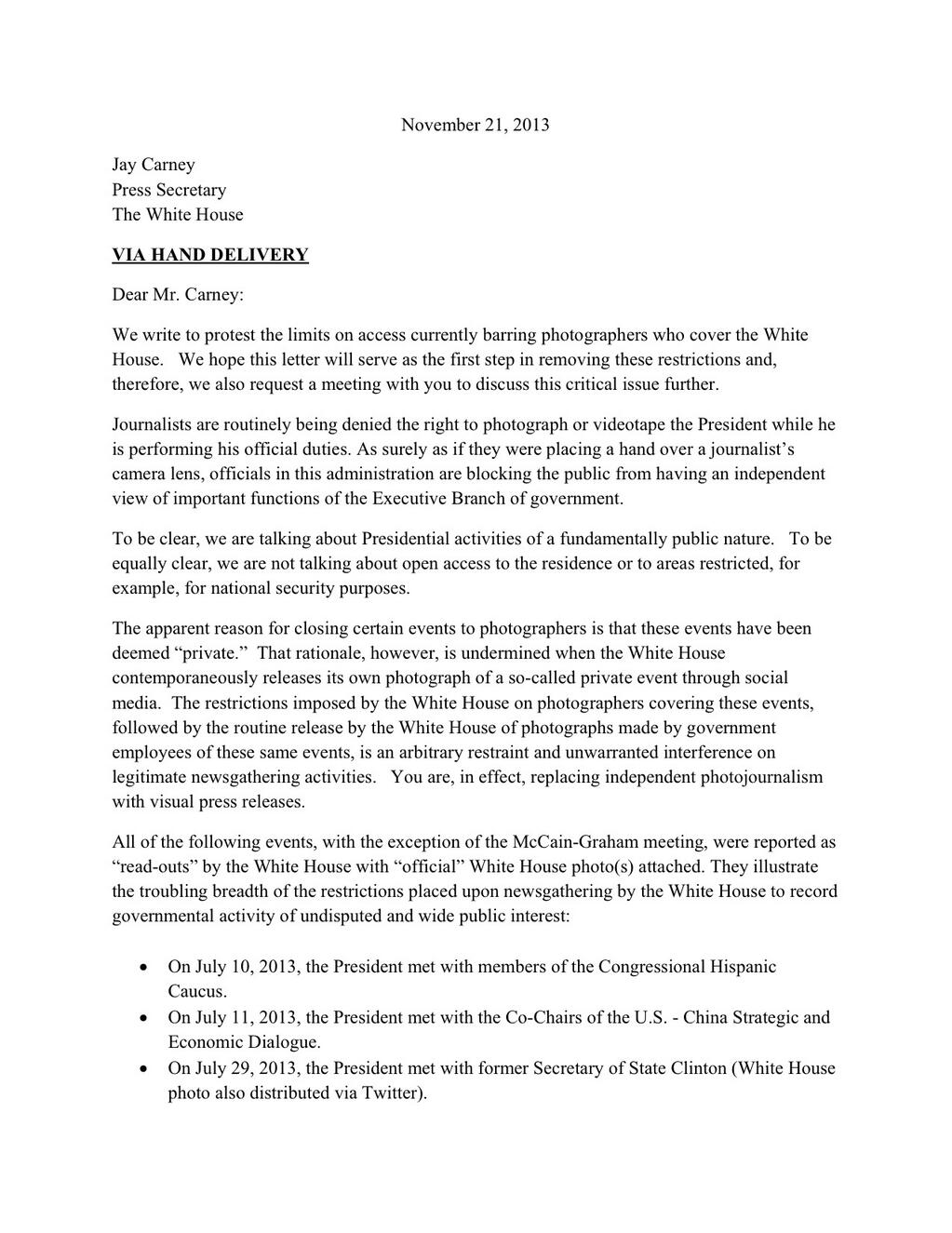
Courtesy of John Ourand at the Sports Business Journal.
Thursday, November 21, 2013
Monday, November 18, 2013
Cortaca More of a Party than a Game
It is a lovely turn of events that I am able to cover a football team in Ithaca that has had its ups and downs over the two years I've been on the beat for The Ithacan. I will be covering an NCAA Tournament game for a team that has a decent chance of making a run to at least the Round of 16. I also covered two Cortaca Jug games.
Those two games have been the amongst most dramatic games I have covered in any sport and credit goes to both teams for playing both games tremendously. I also want to give respect to Fran Elia and the Cortland State Sports Info Department for showing class and professionalism, he sets an example that the rest of the University unfortunately does not follow.
80 people were arrested in Cortland after 'celebrations' went too far and made us wonder what is the definition of a riot. I put 'celebrations' in quotations because of the new mantra that exists around colleges – Ithaca is guilty of this too but not nearly as much – 'win or lose, we still booze.' What happened on Cortland's streets was bound to happen regardless of the result of the game.
Don't get me wrong, I was looking forward to last weekend just as much as anyone else was. However, the reason we look forward to these weekends has little to do with the event they are centered on. In the past decade, Cortaca attendance has dropped from 12,620 at Butterfield Stadium in 2001 to 6500 last Saturday. Part of the reason this has happened is because Cortland State fans have stopped travelling.
It is standard operating procedure for Ithaca to use temporary bleachers on the opposite half of the field to accomodate all travel needs. The way things are going, it may be a smart move for facilities to recycle those bleachers for scrap. Red Dragon fans have stopped travelling to the game because of, ironically, ICTV. ICTV — aided by a webstream and Time Warner Cable syndicating the broadcast —set a record number of viewers for their Cortaca broadcast. This allows for bars to open early and show the game. In Cortland, bars were open at 8 a.m. with a $25 cover. They were packed in an hour.
That is the environment in Cortland now. The game itself has become second-fiddle to the event. The event is a party weekend that is circled on our calendars and we take pride in it. We ran a story celebrating the Cortical and NYCortaca parties that got a lot of play, even a mention from Bomber Head Coach Mike Welch. My preview of the game itself, not nearly as much buzz.
Cortland and Ithaca have opposite cultures and quite frankly, winning the Cortaca Jug means more to each student there than to each student here. Cortland State is a school that has athletics at the forefront of its student life while Cortaca may be the only instance that a sports are the big deal on campus here. In a younger life, I salivated to be at a school like Cortland because I wanted to turn up, be at football games, have a sign featured on College Gameday etc. Now that I see that for every Saturday, there is a Monday.
Cortland State students are spending Monday still not fully recovered from the weekend, Cortland residents clean up and Cortland State's president is trying to save face. All after a season-defining win. This is going to be the future of Cortaca and most people do not seem to mind. The straws are building on the camel's back and I fear that as long as Cortaca remains about the party than the game, the straw that breaks the camel's back will fall.
Then regardless of who wins and regardless of who boozes, everyone loses.
Tuesday, November 5, 2013
Google's Ambiguous Nobility
For all its criticisms lodged its way, Google has done one thing that can go down as being undoubtedly good – centralize self-generated content distribution.
I'm using Blogger, a Google product, to write this. Though I probably won't make a dime off of this post, there are others who have profited off of their content thanks in large part to Google. As the New York Times examined, it is viable to use YouTube, another Google product, as a way to turn a hobby into a business.
There is an ambiguous element of nobility to this. Google is a central hub and distributor for self-generated content. The content is created by users who have genuine interest in their subject and, initially, did not anticipate to make money off of it. Now that it is evident that users can make a money, the gold rush begins. This was Google's goal and it is, for the most part, a good goal to set.
However there is a drawback – censorship.
How you feel about Google's decision to buck to China's pressure on censorship is dependent on how principled you are about free speech. If you fiercely defend free speech, the decision is a disillusioning one. If you are more pragmatic, then you can understand the decision. Seven Levy's In the Plex, chronicles the pressure Google faced internally and externally before making the decision and it brings up a relevant point.
As Google continues to grow, it will be faced with several dilemmas. The Chinese censorship issue illustrated the issues a foreign company like Google has trying to provide a genuine service in a government unlike the one it is based in. The current data collection issue is an issue of trust.
Google genuinely believes they can provide as many services as possible. Centralized self-generated content distribution is one, Maps and Gmail are others. We know that in order for them to effectively do this, they will need data. However, how much data we allow them to have depends on how much faith you have in Google.
I have reasonable faith in Google. Enough so that I use Google Chrome, Gmail and an Android phone. I do acknowledge the potential issues that can arise. But for the most part Google's services have allowed for people to express themselves and get noticed – just like this guy.
I'm using Blogger, a Google product, to write this. Though I probably won't make a dime off of this post, there are others who have profited off of their content thanks in large part to Google. As the New York Times examined, it is viable to use YouTube, another Google product, as a way to turn a hobby into a business.
There is an ambiguous element of nobility to this. Google is a central hub and distributor for self-generated content. The content is created by users who have genuine interest in their subject and, initially, did not anticipate to make money off of it. Now that it is evident that users can make a money, the gold rush begins. This was Google's goal and it is, for the most part, a good goal to set.
However there is a drawback – censorship.
How you feel about Google's decision to buck to China's pressure on censorship is dependent on how principled you are about free speech. If you fiercely defend free speech, the decision is a disillusioning one. If you are more pragmatic, then you can understand the decision. Seven Levy's In the Plex, chronicles the pressure Google faced internally and externally before making the decision and it brings up a relevant point.
As Google continues to grow, it will be faced with several dilemmas. The Chinese censorship issue illustrated the issues a foreign company like Google has trying to provide a genuine service in a government unlike the one it is based in. The current data collection issue is an issue of trust.
Google genuinely believes they can provide as many services as possible. Centralized self-generated content distribution is one, Maps and Gmail are others. We know that in order for them to effectively do this, they will need data. However, how much data we allow them to have depends on how much faith you have in Google.
I have reasonable faith in Google. Enough so that I use Google Chrome, Gmail and an Android phone. I do acknowledge the potential issues that can arise. But for the most part Google's services have allowed for people to express themselves and get noticed – just like this guy.
Sunday, October 27, 2013
When Smarter People Express What's On Your Mind
I am not an eloquent person. But this conversation between Glenn Greenwald and Bill Keller has been the debate I have had internally throughout the course articulated by people who can articulate themselves far better than I ever could.
http://www.nytimes.com/2013/10/28/opinion/a-conversation-in-lieu-of-a-column.html?pagewanted=1&smid=tw-share
Oh and this should be required reading for posterity, especially for those, like me, who take Indy journalism with a grain of salt.
http://www.nytimes.com/2013/10/28/opinion/a-conversation-in-lieu-of-a-column.html?pagewanted=1&smid=tw-share
Oh and this should be required reading for posterity, especially for those, like me, who take Indy journalism with a grain of salt.
Saturday, October 12, 2013
Bombers Run Over Alfred
Because of some decisions beyond my control, I am deciding to use this space as a means to publish my Ithaca football game stories.
The Ithaca College football team dominated on the ground rushing for 214 yards in a 17-6 victory against Alfred University Saturday afternoon at Butterfield Stadium.
The Bombers (4–1, 2–1) established the run early with 25 attempts in the first half. Senior running back Rakim Jones had 15 carries for 69 yards in the half and finished the game with 173 yards and a touchdown. Jones put in a bruising, solid performance averaging 5.5 yards per carry and requiring several Saxon (3–2, 1–1) defenders to bring him down on every attempt. He said the fact that he did not have a single attempt in the Blue and Gold’s 21-9 loss to Hartwick last week motivated him for this week.
“I didn't play the last game, that woke me up,” Jones said. “I've been through a lot of adversity. I worked hard to get here – really hard...I came out here to run better than I did any other time than I ran so that was my statement.”
Jones was not the only Bomber to have a resurgent performance, as junior quarterback Tom Dempsey became the tenth consecutive Bomber quarterback to win his first start. Dempsey completed 14 of 20 passes for 166 yards with no turnovers. He found junior wide receiver Brendan Wojtowicz open on the right sideline for a 28-yard touchdown that proved to be the game-winning score as it gave the South Hill Squad a 14-0 lead midway in the second quarter. Dempsey said the team was well prepared and credited the offensive line with giving him time to make his throws.
“It was a total team effort from the offense to the defense,” Dempsey said. “It all starts with the O-Line, they played a heck of a game. They got the running game going which opens up the pass and everything compliments each other.”
Bomber Head Coach Mike Welch credited the offensive line’s dominance as a key reason why the Bombers had over 38 minutes of possession and three scoring drives of five minutes or more. Welch said Dempsey would be the team’s starting quarterback for their next game at Utica College. He said he was pleased with Dempsey’s performance throughout the game.
“[Dempsey] made some good decisions,” Waelch said. “For his first start, I think that was a good starting point. I’m sure there were some things that we can work on but hopefully we can get better at.”
The Bombers will play the Pioneers (3–2, 1–1) next Saturday at 1 p.m.
Thursday, October 10, 2013
CPJ Blasts Obama
It speaks for itself. The journalists who try to hold the government accountable are fearful they cannot.
Quite frighteningly, those journalists on the federal beat are relied upon to get us information on the government. This is not a problem that Indy or Mainstream media can solve solely by attempting to gas themselves up for their principles. Only collaboration and elbow grease can work so that future administrations will be unable to hush their own employees and by extension, the media.
Wednesday, October 9, 2013
Distance: The Pros and Cons
Much has been made about the idea of proximity in media. The two main points in this idea are that mainstream media is too close to its subjects and that independent media is too far. Both are generally correct but both are oversimplifications.
Take for example, Chris Mortensen's report that Tampa Bay Buccaneers quarterback Josh Freeman is in Stage One of the NFL's Drug Policy. Freeman is in a messy divorce with the Buccaneers and their acerbic Head Coach Greg Schiano. It is a situation as ugly as any in sports history with both sides having gone public deriding the other. And it all came to a head once this was leaked to Mortensen.
According to ESPN, Mortensen has covered the NFL for ESPN since 1991 and covered every Super Bowl since 1979. Outside of anyone at the NFL's own television network or website, he is as connected as any football journalist. So it is no surprise that Mortensen would be connected enough to get this information.
That being said, it is important to ask: is Mortensen being manipulated by the Bucs?
Awful Announcing asks this better than I can.
This is a touchy subject because the ideal we journalists have is to report the truth. Mortensen did this. But in order to report something, journalists need sources. Sources are human and have their own opinions and agendas. Too often, journalists can become ventriloquist dummies used to voice whatever their source wanted out there.
I don't think that was the case with Mortensen because I think Mortensen is too experienced to let that happen to him. I am fearful of that happening with reporters with resumes far less extensive as his. To them here's a simple word of advice: don't let that happen, then you'll end up doing just fine –like Chris Mortensen.
Take for example, Chris Mortensen's report that Tampa Bay Buccaneers quarterback Josh Freeman is in Stage One of the NFL's Drug Policy. Freeman is in a messy divorce with the Buccaneers and their acerbic Head Coach Greg Schiano. It is a situation as ugly as any in sports history with both sides having gone public deriding the other. And it all came to a head once this was leaked to Mortensen.
According to ESPN, Mortensen has covered the NFL for ESPN since 1991 and covered every Super Bowl since 1979. Outside of anyone at the NFL's own television network or website, he is as connected as any football journalist. So it is no surprise that Mortensen would be connected enough to get this information.
That being said, it is important to ask: is Mortensen being manipulated by the Bucs?
Awful Announcing asks this better than I can.
This is a touchy subject because the ideal we journalists have is to report the truth. Mortensen did this. But in order to report something, journalists need sources. Sources are human and have their own opinions and agendas. Too often, journalists can become ventriloquist dummies used to voice whatever their source wanted out there.
I don't think that was the case with Mortensen because I think Mortensen is too experienced to let that happen to him. I am fearful of that happening with reporters with resumes far less extensive as his. To them here's a simple word of advice: don't let that happen, then you'll end up doing just fine –like Chris Mortensen.
Subscribe to:
Posts (Atom)
